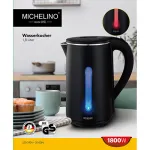
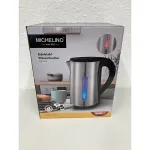
MICHELINO — Glaswasserkocher, 1,8 l
Glass kettle with black plastic handle and lid, 1 800 W, volume: 1.8 litres.
⚖️ Acciones ordenadas por autoridades
- ▸ Measures ordered by economic operators (to: Importer) Recall of the product from end users
- ▸ Measures ordered by economic operators (to: Importer) Withdrawal of the product from market
What is this? This is a glass electric kettle made by MICHELINO. It holds 1.8 litres of water.
What's happening? Tests on similar kettles found too much of a chemical called SCCPs. The company cannot say this kettle is safe from the same problem.
Does this affect me? If you own this kettle in Germany, you may be at risk from this chemical.
What should I do? Stop using the kettle and ask your pharmacist or doctor if you have any health worries.
🤖 Este resumen en lenguaje sencillo se genera automáticamente a partir del aviso oficial de la agencia mediante IA. Es solo para fines informativos — no es un consejo médico. Para tomar decisiones sobre su salud, consulte siempre a un farmacéutico o médico y lea la fuente oficial vinculada a continuación.
🔬 Detalles médicos/técnicos Para profesionales
Risk level: Serious risk · Type: Environment · Category: Electrical appliances and equipment · Hazard: In similar models of kettle by the importer, excessive concentration of short chain chlorinated paraffins (SCCPs) were found. The importer cannot rule out that this product does not have an excessive concentration of SCCPs. SCCPs persist in the environment, are toxic to aquatic organisms at low concentrations and bio-accumulate in wildlife and humans, posing a risk to human health and the environment. · Origin: People's Republic of China
Toda la información de esta página proviene del aviso oficial de la agencia. Nosotros la traducimos y resumimos; no añadimos ni editamos datos.