Celly — Celly camera for kids
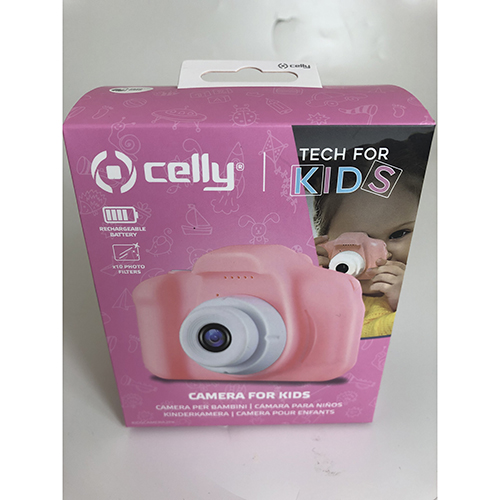
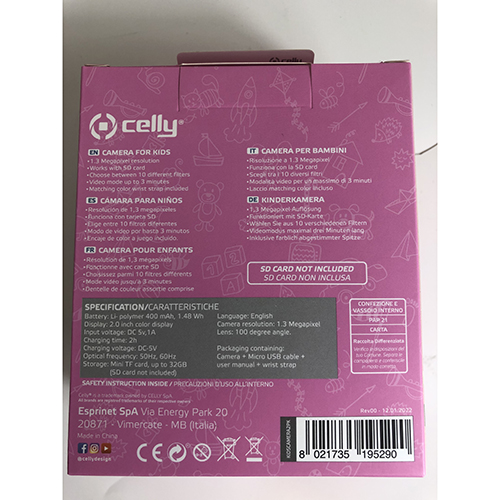
Pink camera. The product is sold online.

- Risk level
- Serious risk
- Tyyppi
- Chemical, Environment
- Luokka
- Electrical appliances and equipment
- Origin
- People's Republic of China
Hazard: The solders in the product have an excessive concentration of lead. (measured value up to 63% by weight). Lead poses a risk to the environment. The plastic material of the cable has an excessive concentration of lead, bis(2-ethylhexyl) phthalate (DEHP), dibutyl phthalate (DBP) and short chain chlorinated paraffins (SCCPs) (measured values: up to 0.22%, 2.6%, 1.1% and 5.5% by weight, respectively). DEHP and DBP poses a risk to human health and the environment. SCCPs persist in the environment, are toxic to aquatic organisms at low concentrations and bio-accumulate in wildlife and humans, posing a risk to human health and the environment. Prolonged exposure to them through the skin may cause cancer.
⚖️ Toimenpiteet viranomaisten määräämässä järjestyksessä
- ▸ Measures ordered by economic operators (to: Distributor) Withdrawal of the product from market
8021735195290
What is this? This is a kids’ camera called Celly. Tests found too much lead and other bad chemicals in the plastic cord and the solder inside.
What's happening? The product has too much lead and other harmful chemicals. These can hurt people and the environment.
Does this affect me? If you have this camera, especially kids who use it, you could be at risk.
What should I do? Stop using it now. Ask your pharmacist or doctor if you have any health worries.
🤖 Tämä selkeäsanainen yhteenveto on tuotettu viranomaisen ilmoituksesta tekoälyä käyttäen. Se on tarkoitettu yleisluontoiseen tiedottamiseen — ei lääkärinlausunto. Terveydestäsi päättäessäsi ota aina yhteyttä apteekkiin tai lääkäriin ja lue alla oleva virallinen lähde.
🔬 Lääketieteelliset / tekniset tiedot ammattilaisille
Risk level: Serious risk · Type: Chemical, Environment · Category: Electrical appliances and equipment · Hazard: The solders in the product have an excessive concentration of lead. (measured value up to 63% by weight). Lead poses a risk to the environment. The plastic material of the cable has an excessive concentration of lead, bis(2-ethylhexyl) phthalate (DEHP), dibutyl phthalate (DBP) and short chain chlorinated paraffins (SCCPs) (measured values: up to 0.22%, 2.6%, 1.1% and 5.5% by weight, respectively). DEHP and DBP poses a risk to human health and the environment. SCCPs persist in the environment, are toxic to aquatic organisms at low concentrations and bio-accumulate in wildlife and humans, posing a risk to human health and the environment. Prolonged exposure to them through the skin may cause cancer. · Origin: People's Republic of China
Kaikki tämän sivun tiedot perustuvat virallisen viraston tiedotteeseen. Käännämme ja tiivistämme ne; emme lisää tai muokkaa faktoja.