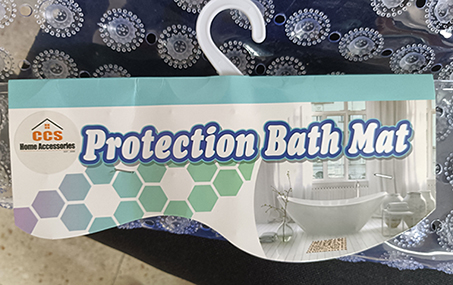
CCS — Protection bath mat
Transparent bath mat
⚖️ Acties bevolen door autoriteiten
- ▸ (to: Other) Withdrawal of the product from market
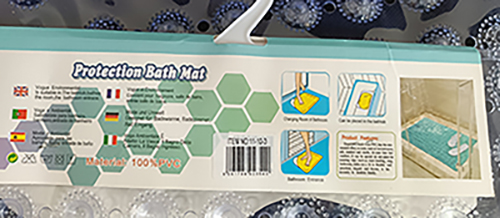
5291788023540
What is this? A bath mat made by CCS has too much of a harmful chemical called DEHP in its plastic. It also has a small amount of another chemical called SCCPs.
What's happening? The mat has more DEHP than is safe. This could hurt children’s health, especially their bodies as they grow. SCCPs can also harm nature and people over time.
Does this affect me? If you have this bath mat in Cyprus, it could be unsafe, especially if you have young children.
What should I do? Stop using the mat right away. Ask a pharmacist or doctor if you need advice.
🤖 Deze begrijpelijke samenvatting wordt automatisch gegenereerd vanuit de officiële mededeling van de instantie met behulp van AI. Het is uitsluitend bedoeld voor algemene informatie — niet als medisch advies. Raadpleeg voor beslissingen over uw gezondheid altijd een apotheker of arts en lees de officiële bron hieronder.
🔬 Medische / technische details voor professionals
Risk level: Serious risk · Type: Chemical, Environment · Category: Furniture · Hazard: The plastic material of the product has an excessive concentration of bis(2-ethylhexyl) phthalate (DEHP), (measured value: 29% by weight) and short-chain chlorinated paraffins (SCCP) (measured value: up to 0.35% by weight) This phthalate may harm the health of children, possibly causing damage to their reproductive systems. SCCPs persist in the environment, are toxic to aquatic organisms at low concentrations and bioaccumulate in wildlife and humans, posing a risk to human health and the environment. · Origin: Unknown
Alle informatie op deze pagina komt van de officiële mededeling van de instantie. Wij vertalen en vatten deze samen; wij voegen geen feiten toe of wijzigen deze.