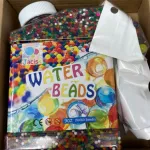
Slumpmässiga uppblåsbara tärningar
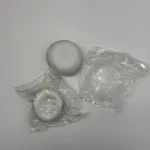
Inflatable dice toy. Product sold online.


- Type
- Chemisch, Milieu
- Categorie
- Speelgoed
- Gevaar
- De doorzichtige PVC-klep van het product bevat een te hoge hoeveelheid bis(2-ethylhexyl)ftalaat (DEHP) en diisononylftalaat (DINP). Daarnaast is de migratie van organotinverbindingen uit de klep te hoog. Deze ftalaten kunnen de gezondheid van kinderen schaden en mogelijk schade aan hun voortplantingsstelsel en lever veroorzaken. Organotinverbindingen zijn mogelijk persistent, bioaccumulerend en giftig voor het milieu.
- Herkomst
- Volksrepubliek China
Willekeurig opblaasbare dobbelstenen Risiconiveau: Ernstig risico
⚖️ Acties bevolen door autoriteiten
- ▸ Measures ordered by economic operators (to: Other) Withdrawal of the product from market
What is this? These are small, clear plastic dice that blow up like balloons. They are toys for children.
What's happening? The clear plastic part (the valve) has too much of two chemicals called DEHP and DINP. It also has too much of another chemical called organotin.
Does this affect me? If you have small children who play with these dice, they could be at risk.
What should I do? Stop using the dice right away. Ask your pharmacist or doctor if your child has touched them.
🤖 Deze begrijpelijke samenvatting wordt automatisch gegenereerd vanuit de officiële mededeling van de instantie met behulp van AI. Het is uitsluitend bedoeld voor algemene informatie — niet als medisch advies. Raadpleeg voor beslissingen over uw gezondheid altijd een apotheker of arts en lees de officiële bron hieronder.
🔬 Medische / technische details voor professionals
Risk level: Serious risk · Type: Chemical, Environment · Category: Toys · Hazard: The valve, made of transparent PVC plastic, of the product contains an excessive amount of bis(2-ethylhexyl) phthalate (DEHP) and diisononyl phthalate (DINP) (measured value: 21% and 1.8% by weight, respectively). In addition, the migration of organotin compounds of the valve is too high (measured value up to 31 mg/kg). These phthalates may harm the health of children, causing possible damage to their reproductive system and liver. Organotin compounds are potentially persistant, bioacumulative and toxic for the environment. · Origin: People's Republic of China
Alle informatie op deze pagina komt van de officiële mededeling van de instantie. Wij vertalen en vatten deze samen; wij voegen geen feiten toe of wijzigen deze.