Wireless charger
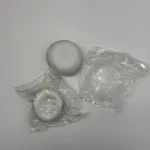
Wireless charger, black
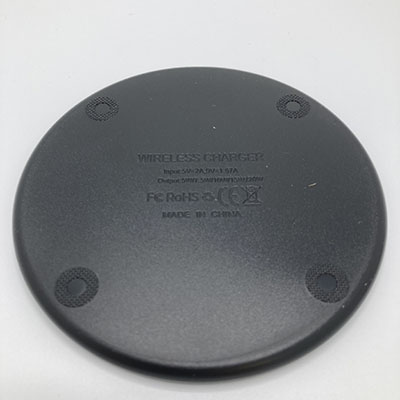
- Draadloze oplader Risiconiveau
- Overige meldingen
- Type
- Milieu
- Categorie
- Elektrische apparaten
- Gevaar
- De soldeerverbindingen bevatten te veel lood (tot 48 % van het gewicht). De plastic kabel bevat te veel DBP en DEHP (tot respectievelijk 0,1 % en 2,4 % van het gewicht). Ook zitten er te veel kortketenige gechloreerde paraffines (SCCPs) in (tot 1,25 % van het gewicht). Lood vormt een risico voor het milieu. DEHP en DBP vormen een risico voor de gezondheid en het milieu. SCCPs blijven in het milieu aanwezig, zijn giftig voor waterorganismen en hopen zich op in mens en dier, wat een risico vormt voor de gezondheid en het milieu. Langdurige blootstelling via de huid kan kanker veroorzaken.
⚖️ Acties bevolen door autoriteiten
- ▸ Measures ordered by economic operators (to: Importer) Withdrawal of the product from market
What is this? This is a wireless phone charger sold in Sweden. It has parts that may be unsafe.
What's happening? The charger’s wires and plastic parts contain too much lead and other harmful chemicals. These can hurt people and the environment.
Does this affect me? If you own this charger, you may be exposed to these chemicals over time.
What should I do? Stop using it right away. Ask a pharmacist or doctor if you feel unwell. Return it to where you bought it.
🤖 Deze begrijpelijke samenvatting wordt automatisch gegenereerd vanuit de officiële mededeling van de instantie met behulp van AI. Het is uitsluitend bedoeld voor algemene informatie — niet als medisch advies. Raadpleeg voor beslissingen over uw gezondheid altijd een apotheker of arts en lees de officiële bron hieronder.
🔬 Medische / technische details voor professionals
Risk level: Other types of alerts · Type: Environment · Category: Electrical appliances and equipment · Hazard: The solders have an excessive concentration of lead (measured value up to 48 % by weight). The plastic cable has excessive concentrations of DBP and DEHP (measured value up to 0.1 and 2.4 % by weight, respectively). The plastic cable has also excessive concentrations of short-chain chlorinated paraffins (SCCPs) (measured value up to 1.25 % by weight). Lead poses a risk to the environment DEHP and DBP poses a risk to human health and the environment. SCCPs persist in the environment, are toxic to aquatic organisms at low concentrations and bio-accumulate in wildlife and humans, posing a risk to human health and the environment. Prolonged exposure to them through the skin may cause cancer. · Origin: People's Republic of China
Alle informatie op deze pagina komt van de officiële mededeling van de instantie. Wij vertalen en vatten deze samen; wij voegen geen feiten toe of wijzigen deze.