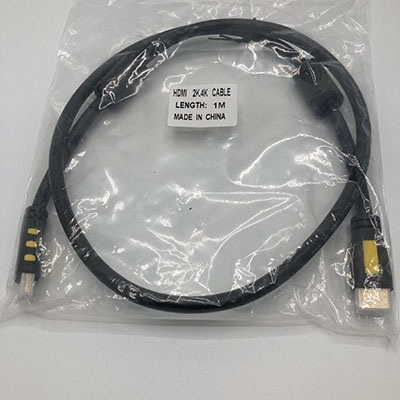
HDMI cable
Black cable. 1 m.
- Risk level
- Other types of alerts
- Typ
- Chemical, Environment
- Kategoria
- Electrical appliances and equipment
- Origin
- People's Republic of China
Hazard: The plastic material of the cable has an excessive concentration of bis(2-ethylhexyl) phthalate (DEHP) (measured value up to 0.37 % by weight). The plastic also has excessive concentrations of short-chain chlorinated paraffins (SCCPs) (measured value up to 1.15 % by weight) DEHP poses a risk to human health and the environment. SCCPs persist in the environment, are toxic to aquatic organisms at low concentrations and bio-accumulate in wildlife and humans, posing a risk to human health and the environment. Prolonged exposure to them through the skin may cause cancer.
⚖️ Działania zlecone przez władze
- ▸ Measures ordered by economic operators (to: Distributor) Withdrawal of the product from market
What is this? This is an HDMI cable made in China. The plastic part has two harmful chemicals: DEHP and SCCPs.
What's happening? Tests show the cable has too much DEHP and SCCPs. These can harm people and the environment.
Does this affect me? If you use this cable often, you may be at risk. It mostly affects people in Sweden.
What should I do? Stop using the cable. Ask your doctor or pharmacist for advice.
🤖 To jest automatycznie generowane streszczenie w języku prostym na podstawie oficjalnego komunikatu agencji, przy użyciu AI. Ma charakter wyłącznie informacyjny — nie stanowi porady medycznej. W kwestiach dotyczących Twojego zdrowia zawsze konsultuj się z farmaceutą lub lekarzem oraz zapoznaj się z oficjalnym źródłem zamieszczonym poniżej.
🔬 Szczegóły medyczne / techniczne dla specjalistów
Risk level: Other types of alerts · Type: Chemical, Environment · Category: Electrical appliances and equipment · Hazard: The plastic material of the cable has an excessive concentration of bis(2-ethylhexyl) phthalate (DEHP) (measured value up to 0.37 % by weight). The plastic also has excessive concentrations of short-chain chlorinated paraffins (SCCPs) (measured value up to 1.15 % by weight) DEHP poses a risk to human health and the environment. SCCPs persist in the environment, are toxic to aquatic organisms at low concentrations and bio-accumulate in wildlife and humans, posing a risk to human health and the environment. Prolonged exposure to them through the skin may cause cancer. · Origin: People's Republic of China
Wszystkie informacje na tej stronie pochodzą z oficjalnego komunikatu agencji. Tłumaczymy i podsumowujemy je; nie dodajemy ani nie zmieniamy faktów.