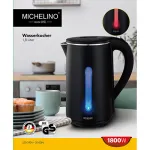
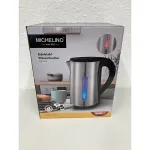
MICHELINO — Glaswasserkocher, 1,8 l
Glass kettle with black plastic handle and lid, 1 800 W, volume: 1.8 litres.
- Risk level
- Serious risk
- Tip
- Environment
- Categorie
- Electrical appliances and equipment
- Origin
- People's Republic of China
Hazard: In similar models of kettle by the importer, excessive concentration of short chain chlorinated paraffins (SCCPs) were found. The importer cannot rule out that this product does not have an excessive concentration of SCCPs. SCCPs persist in the environment, are toxic to aquatic organisms at low concentrations and bio-accumulate in wildlife and humans, posing a risk to human health and the environment.
⚖️ Acțiuni ordonate de autorități
- ▸ Measures ordered by economic operators (to: Importer) Recall of the product from end users
- ▸ Measures ordered by economic operators (to: Importer) Withdrawal of the product from market
What is this? This is a glass electric kettle made by MICHELINO. It holds 1.8 litres of water.
What's happening? Tests on similar kettles found too much of a chemical called SCCPs. The company cannot say this kettle is safe from the same problem.
Does this affect me? If you own this kettle in Germany, you may be at risk from this chemical.
What should I do? Stop using the kettle and ask your pharmacist or doctor if you have any health worries.
🤖 Această prezentare simplificată este generată automat din comunicatul oficial al agenției folosind inteligență artificială. Este doar pentru informare generală — nu reprezintă sfaturi medicale. Pentru decizii privind sănătatea dumneavoastră, consultați întotdeauna un farmacist sau un medic și citiți sursa oficială de mai jos.
🔬 Detalii medicale / tehnice pentru profesioniști
Risk level: Serious risk · Type: Environment · Category: Electrical appliances and equipment · Hazard: In similar models of kettle by the importer, excessive concentration of short chain chlorinated paraffins (SCCPs) were found. The importer cannot rule out that this product does not have an excessive concentration of SCCPs. SCCPs persist in the environment, are toxic to aquatic organisms at low concentrations and bio-accumulate in wildlife and humans, posing a risk to human health and the environment. · Origin: People's Republic of China
Toate informațiile de pe această pagină provin din comunicatul oficial al agenției. Noi le traducem și le sintetizăm; nu adăugăm și nu modificăm fapte.