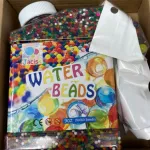
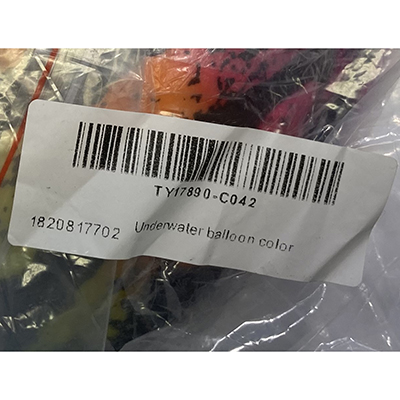
Underwater balloon color
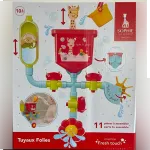
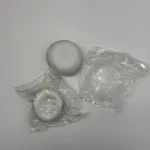
Inflatable ball with pattern in black, orange, yellow and green. Product sold online.
- Risk level
- Serious risk
- Tip
- Chemical, Environment
- Categorie
- Toys
- Origin
- People's Republic of China
Hazard: The plastic material of the product has an excessive concentration of diisobutyl phthalate (DIBP), dibutyl phthalate (DBP) and short-chain chlorinated paraffins (SCCPs) (measured values: up to 7.5%,14% and 2.7% by weight, respectively). These phthalates may harm the health of children, causing possible damage to their reproductive system. SCCPs persist in the environment, are toxic to aquatic organisms at low concentrations and bio-accumulate in wildlife and humans, posing a risk to human health and the environment. Prolonged exposure to them through the skin may cause cancer.
⚖️ Acțiuni ordonate de autorități
- ▸ (to: Exportator) Ban on the marketing of the product and any accompanying measures
What is this? This is a toy balloon that is meant to be used underwater. The plastic may have too much of three harmful chemicals.
What's happening? Tests show the balloon has high levels of three chemicals that can be bad for health and the environment.
Does this affect me? Children who play with this balloon could be harmed. The chemicals also harm nature.
What should I do? Stop using the balloon right away. Ask your pharmacist or doctor if you have used it.
🤖 Această prezentare simplificată este generată automat din comunicatul oficial al agenției folosind inteligență artificială. Este doar pentru informare generală — nu reprezintă sfaturi medicale. Pentru decizii privind sănătatea dumneavoastră, consultați întotdeauna un farmacist sau un medic și citiți sursa oficială de mai jos.
🔬 Detalii medicale / tehnice pentru profesioniști
Risk level: Serious risk · Type: Chemical, Environment · Category: Toys · Hazard: The plastic material of the product has an excessive concentration of diisobutyl phthalate (DIBP), dibutyl phthalate (DBP) and short-chain chlorinated paraffins (SCCPs) (measured values: up to 7.5%,14% and 2.7% by weight, respectively). These phthalates may harm the health of children, causing possible damage to their reproductive system. SCCPs persist in the environment, are toxic to aquatic organisms at low concentrations and bio-accumulate in wildlife and humans, posing a risk to human health and the environment. Prolonged exposure to them through the skin may cause cancer. · Origin: People's Republic of China
Toate informațiile de pe această pagină provin din comunicatul oficial al agenției. Noi le traducem și le sintetizăm; nu adăugăm și nu modificăm fapte.