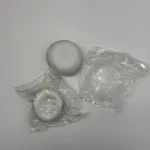
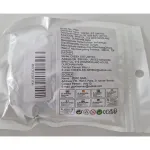
Network cable
Network cable 2 m

- Risk level
- Serious risk
- Typ
- Chemical, Environment
- Kategori
- Electrical appliances and equipment
- Origin
- Unknown
Hazard: The plastic material of the cable has excessive concentrations of bis(2-ethylhexyl) phthalate (DEHP) and short chain chlorinated paraffins (SCCPs) (measured values: up to 5% and 0.77% by weight, respectively). DEHP poses a risk to human health and the environment. SCCPs persist in the environment, are toxic to aquatic organisms at low concentrations and bio-accumulate in wildlife and humans, posing a risk to human health and the environment. Prolonged exposure to them through the skin may cause cancer.
⚖️ Åtgärder ordnade av myndigheter
- ▸ Measures ordered by economic operators (to: Distributor) Withdrawal of the product from market
5706470041899
What is this? This is a network cable with plastic that has too much of two chemicals called DEHP and SCCPs.
What's happening? These chemicals can harm people and the environment if used for a long time.
Does this affect me? If you have this cable at home, you might be at risk if you use it often.
What should I do? Stop using the cable and ask your pharmacist or doctor if you need help.
🤖 Denna lättläst sammanfattning har genererats automatiskt från myndighetens officiella meddelande med hjälp av AI. Informationen är endast avsedd för allmän kännedom — inte som medicinsk rådgivning. För beslut om din hälsa, rådfråga alltid apotekspersonal eller läkare och läs den officiella källan som länkas nedan.
🔬 Medicinska/tekniska detaljer för yrkesverksamma
Risk level: Serious risk · Type: Chemical, Environment · Category: Electrical appliances and equipment · Hazard: The plastic material of the cable has excessive concentrations of bis(2-ethylhexyl) phthalate (DEHP) and short chain chlorinated paraffins (SCCPs) (measured values: up to 5% and 0.77% by weight, respectively). DEHP poses a risk to human health and the environment. SCCPs persist in the environment, are toxic to aquatic organisms at low concentrations and bio-accumulate in wildlife and humans, posing a risk to human health and the environment. Prolonged exposure to them through the skin may cause cancer. · Origin: Unknown
All information på denna sida kommer från den officiella myndighetsnotisen. Vi översätter och sammanfattar den; vi lägger inte till eller ändrar fakta.