Wireless charger
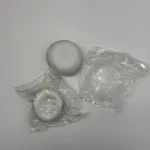
Wireless charger, black
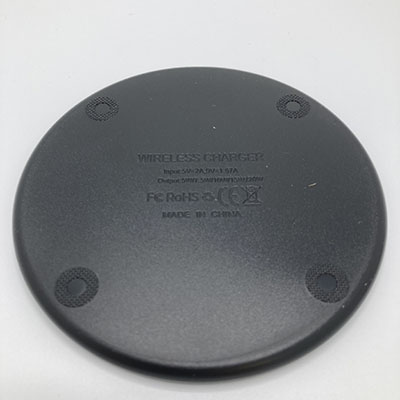
- Der kabellose Ladegerät Gefahrenstufe
- Andere Warnungen
- Art
- Umwelt
- Kategorie
- Elektrische Geräte
- Gefahr
- Die Lötstellen enthalten einen übermäßigen Bleigehalt (gemessener Wert bis zu 48 % nach Gewicht). Das Plastikkabel enthält übermäßige Konzentrationen an DBP und DEHP (gemessene Werte bis zu 0,1 % bzw. 2,4 % nach Gewicht). Das Plastikkabel enthält ebenfalls übermäßige Konzentrationen an kurzkettigen chlorierten Paraffinen (SCCPs) (gemessener Wert bis zu 1,25 % nach Gewicht).
⚖️ Von Behörden angeordnete Maßnahmen
- ▸ Measures ordered by economic operators (to: Importer) Withdrawal of the product from market
What is this? This is a wireless phone charger sold in Sweden. It has parts that may be unsafe.
What's happening? The charger’s wires and plastic parts contain too much lead and other harmful chemicals. These can hurt people and the environment.
Does this affect me? If you own this charger, you may be exposed to these chemicals over time.
What should I do? Stop using it right away. Ask a pharmacist or doctor if you feel unwell. Return it to where you bought it.
🤖 Diese allgemeinverständliche Zusammenfassung wird automatisch aus der offiziellen Mitteilung der Behörde mithilfe von KI erstellt. Sie dient nur zur allgemeinen Information – nicht als medizinischer Rat. Treffen Sie gesundheitsbezogene Entscheidungen immer in Absprache mit einer Apothekerin oder einem Arzt und lesen Sie die verlinkte offizielle Quelle unten.
🔬 Medizinische / technische Details Für Fachkräfte
Risk level: Other types of alerts · Type: Environment · Category: Electrical appliances and equipment · Hazard: The solders have an excessive concentration of lead (measured value up to 48 % by weight). The plastic cable has excessive concentrations of DBP and DEHP (measured value up to 0.1 and 2.4 % by weight, respectively). The plastic cable has also excessive concentrations of short-chain chlorinated paraffins (SCCPs) (measured value up to 1.25 % by weight). Lead poses a risk to the environment DEHP and DBP poses a risk to human health and the environment. SCCPs persist in the environment, are toxic to aquatic organisms at low concentrations and bio-accumulate in wildlife and humans, posing a risk to human health and the environment. Prolonged exposure to them through the skin may cause cancer. · Origin: People's Republic of China
Alle Informationen auf dieser Seite stammen aus der offiziellen Agenturmitteilung. Wir übersetzen und fassen sie zusammen; wir ergänzen oder ändern keine Fakten.