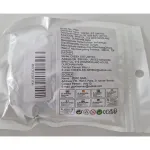
Infant electric nasal absorber
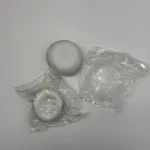
White plastic electronic nose cleaner for children.


- Type
- Chimique, Environnement
- Catégorie
- Appareils et équipements électriques
- Danger
- Les soudures du produit contiennent des concentrations excessives de phtalate de bis(2-éthylhexyle) (DEHP) et de paraffines chlorées à chaîne courte (SCCP) (valeurs mesurées jusqu'à 1,63 % et 1,5 % en poids, respectivement). Le DEHP présente un risque pour la santé humaine et l'environnement. Les SCCP persistent dans l'environnement, sont toxiques pour les organismes aquatiques à faible concentration et s'accumulent dans la faune et les humains, présentant un risque pour la santé humaine et l'environnement. Une exposition prolongée par la peau peut causer le cancer.
- Origine
- Inconnue
Aspirateur nasal électrique pour nourrissons Niveau de risque : Risque grave
⚖️ Actions ordonnées par les autorités
- ▸ Measures ordered by economic operators (to: Distributor) Withdrawal of the product from market
What is this? This is a small electric tool used to clear mucus from a baby’s nose. It has parts held together by solder that may contain harmful chemicals.
What's happening? Tests found too much of two unsafe chemicals in the solder. These chemicals can harm people and the environment.
Does this affect me? If you have this tool in Sweden, your baby may have been exposed to these chemicals.
What should I do? Stop using it and ask your pharmacist or doctor for advice.
🤖 Ce résumé en langage clair est généré automatiquement à partir de l'avis officiel de l'agence à l'aide de l'IA. Il est fourni à titre d'information générale uniquement — il ne s'agit pas de conseils médicaux. Pour toute décision concernant votre santé, consultez toujours un pharmacien ou un médecin et lisez la source officielle liée ci-dessous.
🔬 Détails médicaux / techniques (pour les professionnels)
Risk level: Serious risk · Type: Chemical, Environment · Category: Electrical appliances and equipment · Hazard: The solders in the product have excessive concentrations of bis(2-ethylhexyl) phthalate (DEHP) and short chain chlorinated paraffins (SCCP) (measured values up to 1.63% and 1.5% by weight, respectively). DEHP poses a risk to human health and the environment. SCCPs persist in the environment, are toxic to aquatic organisms at low concentrations and bio-accumulate in wildlife and humans, posing a risk to human health and the environment. Prolonged exposure to them through the skin may cause cancer. · Origin: Unknown
Toutes les informations de cette page proviennent de l'avis officiel de l'agence. Nous les traduisons et les résumons ; nous n'ajoutons ni ne modifions les faits.