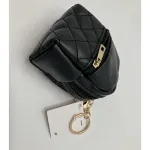
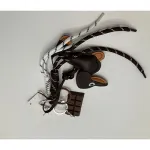
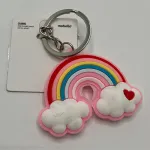
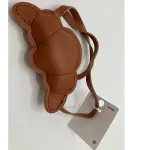
Mobello — Mobile charm dog
Plastic black dachshund dog attached to a key ring, intended as a charm for mobile phones and bags.

⚖️ Von Behörden angeordnete Maßnahmen
- ▸ (to: Manufacturer) Import rejected at border
7340224626895
What is this? This is a small dog-shaped charm sold for mobile phones. It is made in China.
What's happening? The charm has too much of three harmful chemicals. These can leak out and harm people or the planet.
Does this affect me? If you own this charm in Sweden, it may be unsafe to touch or use.
What should I do? Stop using it right away. Ask your pharmacist or doctor if you feel unwell after touching it.
🤖 Diese allgemeinverständliche Zusammenfassung wird automatisch aus der offiziellen Mitteilung der Behörde mithilfe von KI erstellt. Sie dient nur zur allgemeinen Information – nicht als medizinischer Rat. Treffen Sie gesundheitsbezogene Entscheidungen immer in Absprache mit einer Apothekerin oder einem Arzt und lesen Sie die verlinkte offizielle Quelle unten.
🔬 Medizinische / technische Details Für Fachkräfte
Risk level: Serious risk · Type: Chemical, Environment · Category: Decorative articles · Hazard: The product contains an excessive concentration of bis(2-ethylhexyl) phthalate (DEHP), dibutyl phthalate (DBP) and short chain chlorinated paraffins (SCCPs) (measured values up to 5.8%, 0.7% and 0.35% by weight, respectively). The phthalates may harm the health of children, causing possible damage to their reproductive system. SCCPs persist in the environment, are toxic to aquatic organisms at low concentrations and bio-accumulate in wildlife and humans, posing a risk to human health and the environment. Prolonged exposure to them through the skin may cause cancer. · Origin: People's Republic of China
Alle Informationen auf dieser Seite stammen aus der offiziellen Agenturmitteilung. Wir übersetzen und fassen sie zusammen; wir ergänzen oder ändern keine Fakten.