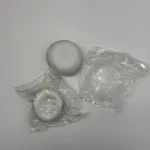
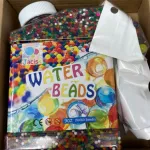
Plastic ball
Inflatable ball made of soft plastic material.


- Plastikball Gefahrenstufe
- Ernstes Risiko
- Art
- Chemisch
- Kategorie
- Spielzeug
- Gefahr
- Das Spielzeug enthält einen übermäßigen Anteil an Dibutylphthalat (DBP) und Diisobutylphthalat (DIBP). Diese Weichmacher können die Gesundheit von Kindern beeinträchtigen, möglicherweise durch Schädigung des Fortpflanzungssystems.
- Herkunft
- Volksrepublik China
⚖️ Von Behörden angeordnete Maßnahmen
- ▸ Measures ordered by economic operators (to: Importer) Withdrawal of the product from market
- ▸ Measures ordered by economic operators (to: Importer) Warning consumers of the risks
- ▸ Measures ordered by economic operators (to: Importer) Destruction of the product
5905172635072
What is this? A plastic ball toy may have too much of two chemicals called DBP and DIBP. These chemicals can hurt children’s health.
What's happening? The toy has unsafe levels of these chemicals. They can harm kids, especially their bodies that grow and change.
Does this affect me? If you have a child who plays with plastic balls, check the toy. It may be unsafe.
What should I do? Stop using the ball right away. Ask your pharmacist or doctor if you need help.
🤖 Diese allgemeinverständliche Zusammenfassung wird automatisch aus der offiziellen Mitteilung der Behörde mithilfe von KI erstellt. Sie dient nur zur allgemeinen Information – nicht als medizinischer Rat. Treffen Sie gesundheitsbezogene Entscheidungen immer in Absprache mit einer Apothekerin oder einem Arzt und lesen Sie die verlinkte offizielle Quelle unten.
🔬 Medizinische / technische Details Für Fachkräfte
Risk level: Serious risk · Type: Chemical · Category: Toys · Hazard: The toy contains an excessive amount of dibutyl phthalate (DBP) and diisobutyl phthalate (DIBP) (measured values up to 1.71% and 20.6% by weight, respectively). These phthalates may harm the health of children, possibly by causing damage to the reproductive system. · Origin: People's Republic of China
Alle Informationen auf dieser Seite stammen aus der offiziellen Agenturmitteilung. Wir übersetzen und fassen sie zusammen; wir ergänzen oder ändern keine Fakten.